Concrete Services
Stained Concrete in New Rochelle, NY
A lot of New Rochelle concrete is perfectly sound but plain gray, or patched in three shades from decades of repairs. We stain concrete in New Rochelle, NY, turning basement floors, porches, patios and pool surrounds into finished surfaces with real color, then sealing them for Westchester winters.
(914) 350-5719Price My Stain Job
Tell us where the concrete is and roughly how big it is. Photos help, and we will come out to test a stain sample.
Prefer to talk? Call (914) 350-5719.
Form powered by Splitforms
- Licensed
- Insured
- Free Estimates
- Emergency Response
Where staining makes sense in New Rochelle
New Rochelle has an unusually wide range of homes for one city. There are 1910s and 1920s Tudors and colonials in Rochelle Heights, Residence Park and Beechmont, mid-century split-levels farther north toward Wykagyl and the Scarsdale border, waterfront houses on Davenport Neck and Premium Point, and new apartment towers rising downtown near the train station. Almost all of them have concrete somewhere that could look better.
The most common jobs we see here:
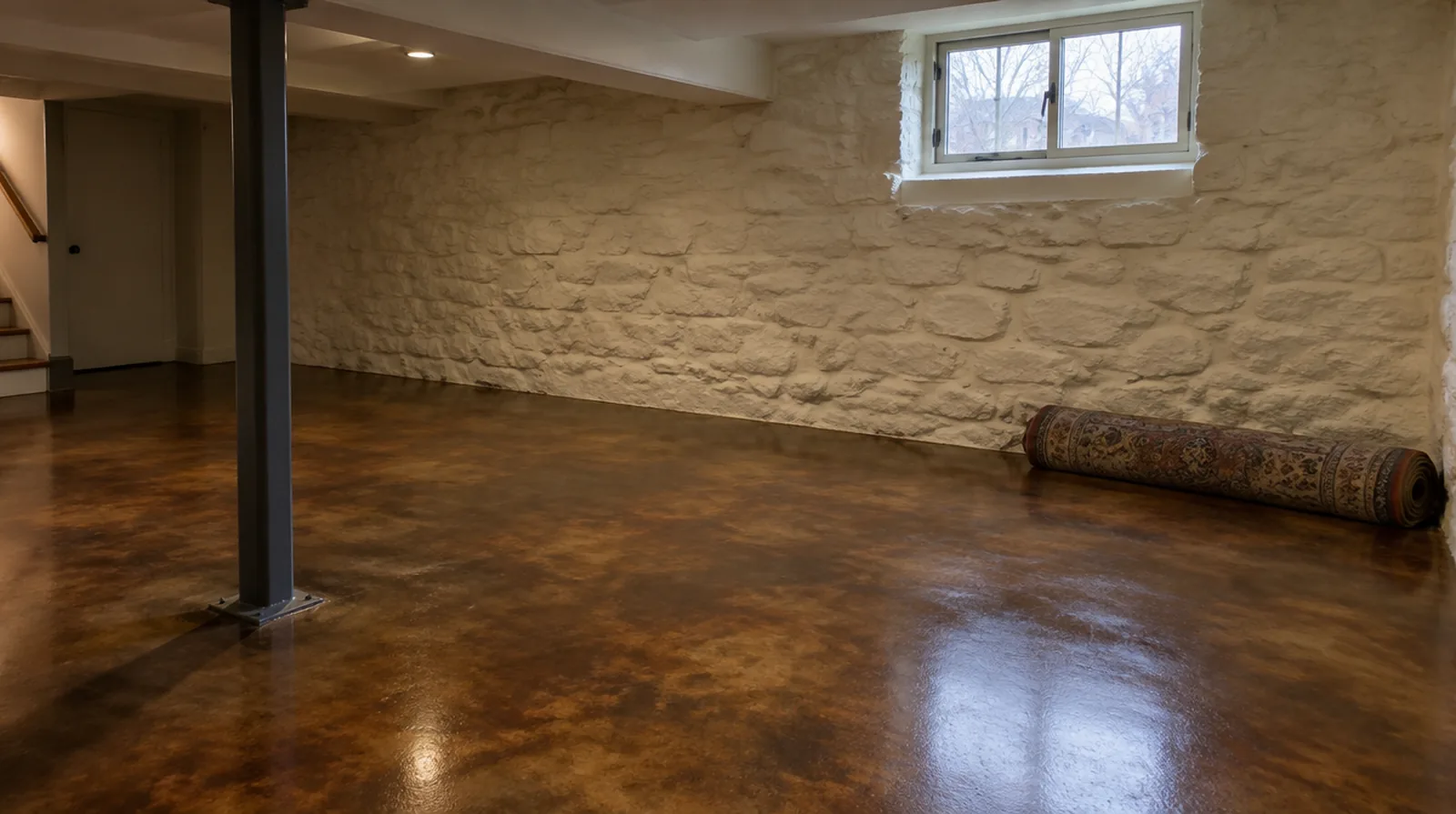
- Basement floors in older houses, where owners want a finished room without putting carpet or wood over a slab that may get damp.
- Front porches and stoops that have been painted repeatedly and keep peeling.
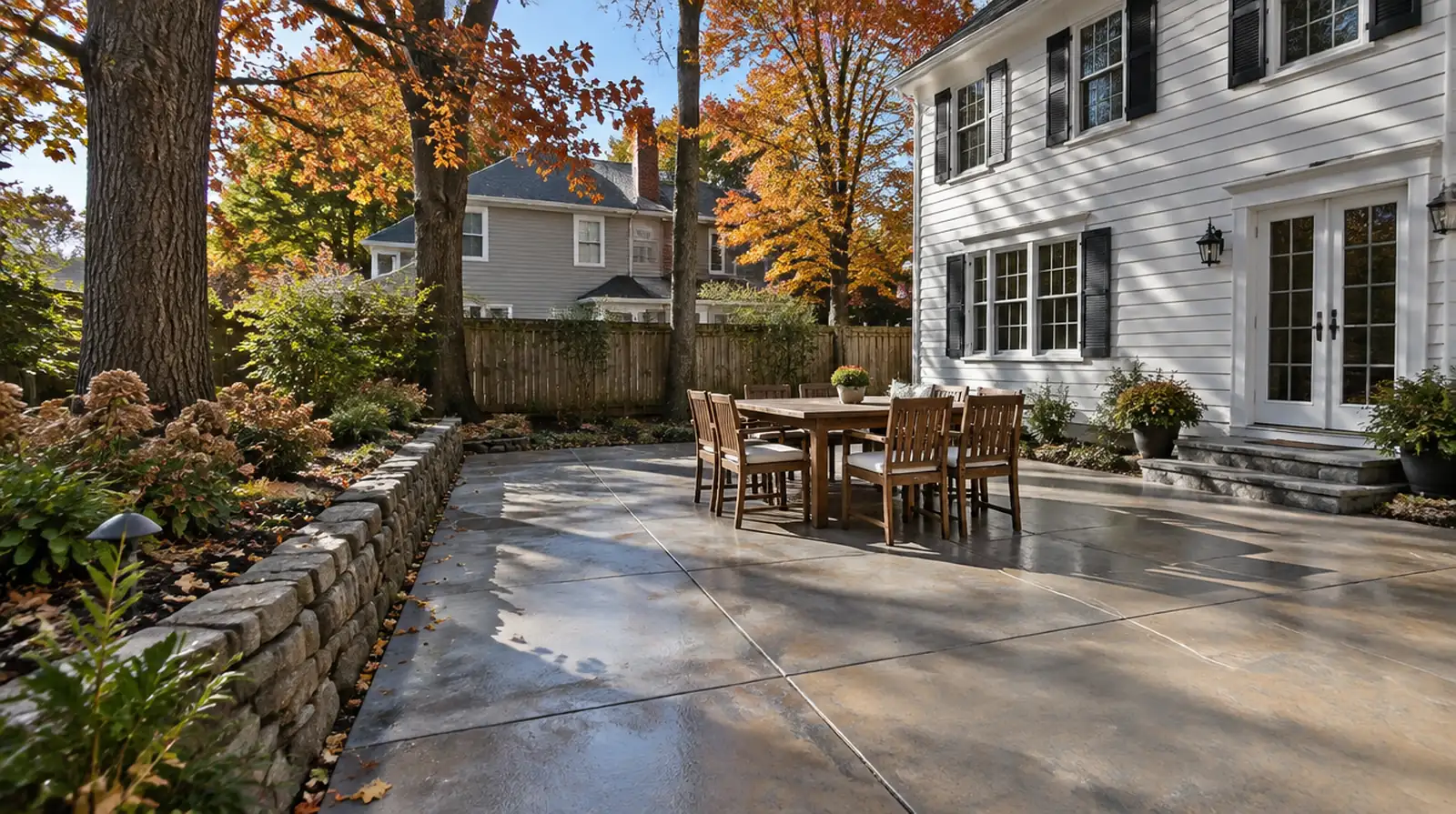
- Back patios and walkways that are structurally fine but stained by leaves, rust or years of grime.
- Pool surrounds and outdoor kitchens where homeowners want color without the cost of pavers.
- Garages and mudrooms that double as workshops or entryways.
Acid stain or water-based stain?
There are two families of stain, and the right one depends on your slab. Acid stains react chemically with the lime in cured concrete. The result is translucent, variegated color in earth tones like amber, walnut, rust and soft green. No two floors look the same, which is the appeal. They work best on bare, clean concrete that has never been sealed or painted.
Water-based stains sit in the surface rather than reacting with it. They come in a much wider color range, including grays, blacks, blues and more even tones, and they can be layered to hide patches. On a basement floor with old adhesive shadows or a patio repaired in different years, water-based stain is often the better choice because it blends areas that acid stain would exaggerate.
We always test first. A small sample in a corner shows how your particular concrete takes color, which matters a lot on slabs that are 70 or 100 years old.
What older basements need first
Many basements in the older neighborhoods have slabs poured directly on soil, sometimes without a vapor barrier, and some sit near a high water table close to the Sound. Moisture coming up through the floor can push white mineral deposits, called efflorescence, to the surface and keep sealers from bonding. Before staining we check moisture, clean off efflorescence, and grind away old paint, carpet glue and mastic from tile that came up years ago. Old black mastic can contain asbestos in homes of a certain age, and we will not grind it until it has been tested.
Cracks get attention too. Hairline cracks usually take stain and become part of the look. Wider cracks or settled sections should be fixed before color goes down, and our concrete repair work can handle that in the same visit.
Outdoor stain and Westchester winters
A patio or porch here sees freeze-thaw cycles all winter, plus road salt tracked in from the street and ice melt spread on the steps. Salt is hard on concrete and harder on a worn sealer. For exterior work we use a breathable sealer rated for freeze-thaw, add a fine grit where people walk so the surface is not slick when wet, and recommend calcium magnesium acetate or sand instead of rock salt on stained surfaces. Plan on resealing outdoor stain every two to three years. Interior floors last much longer between coats.
Timing matters. We stain outdoor concrete between about April and late October, when nighttime temperatures stay above 50 degrees and the slab is dry. Basements can be done any time of year.
How a stain job goes
- Look and test. We check the slab, talk through colors and run a sample patch.
- Prep. Grinding, cleaning and crack repair. This is most of the work.
- Stain. One or two coats, applied by hand to build depth.
- Neutralize and rinse for acid stains, so the reaction stops.
- Seal. Two coats of sealer, matte to gloss, interior or exterior grade.
Most basements and patios take two to three days. You can walk on the floor the day after sealing and put furniture back after about two days.
Thinking about new concrete instead?
If a patio has sunk or heaved badly, staining will not hide it. In that case a new pour makes more sense, and we can color it as part of the job. See our concrete patios page, or ask about new concrete steps for a crumbling front stoop. We also stain concrete in Pelham, Larchmont, Mamaroneck and Eastchester.
Want color on your concrete?
(914) 350-5719Tell us where the concrete is and how it is used. We will test a stain on your slab and give you a written price.