Concrete Services
Concrete Slabs in New Rochelle, NY
From a cracked garage floor behind a 1920s house in Residence Park to a new generator pad on Davenport Neck, we pour concrete slabs for New Rochelle homeowners that sit flat, drain the right way and handle Westchester winters. The work begins with the ground underneath, which in this city can change from rock to soft fill within a few feet.
(914) 350-5719Quote My Slab
Tell us the size of the slab and what will sit on it. Photos of the spot help, and we will come out to measure.
Prefer to talk? Call (914) 350-5719.
Form powered by Splitforms
- Licensed
- Insured
- Free Estimates
- Emergency Response
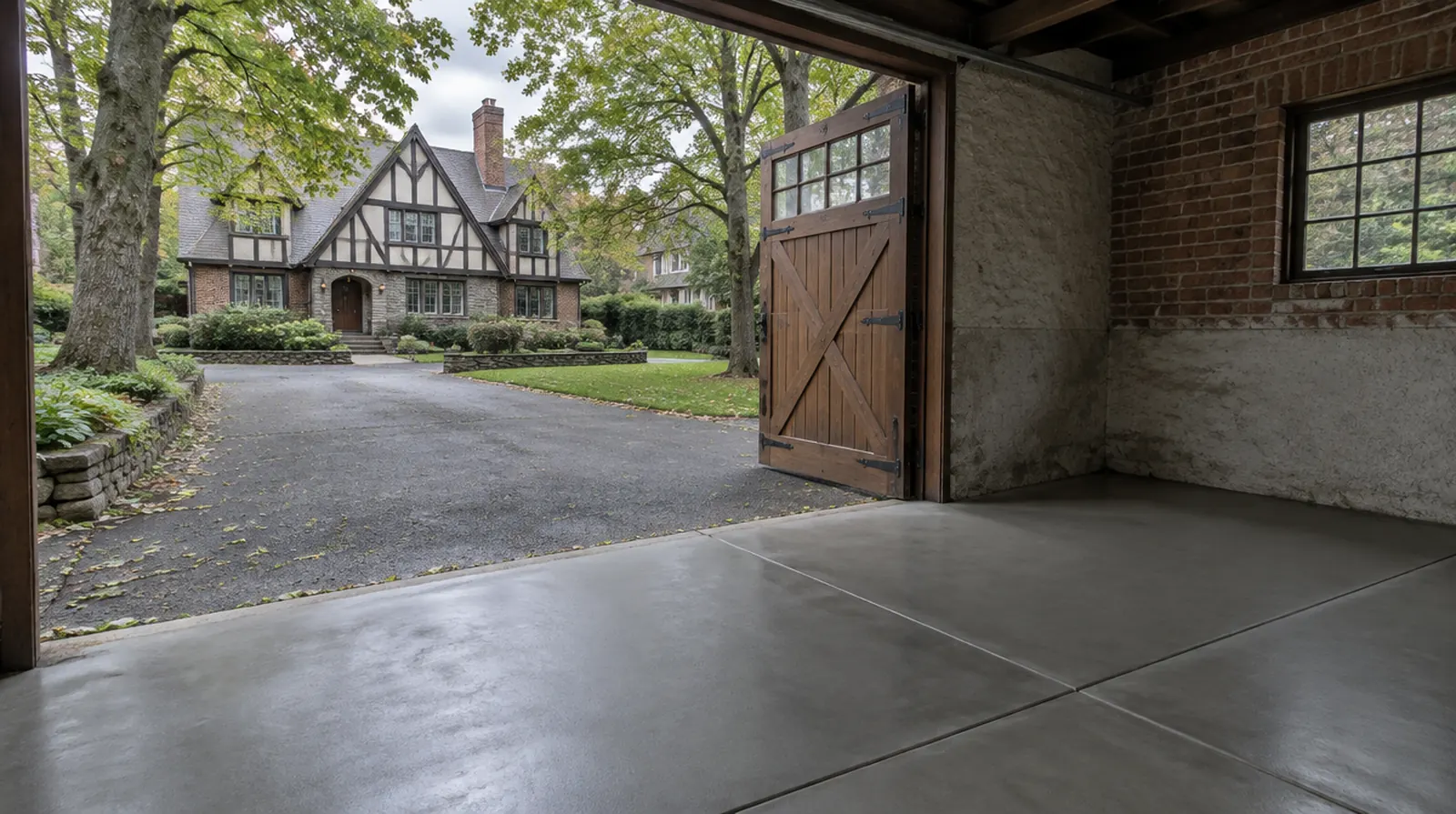
The ground under New Rochelle
New Rochelle sits on a thin layer of glacial till over shallow bedrock. In the north end, around Quaker Ridge Road and Wykagyl, crews regularly find boulders and outcrops just under the lawn. Closer to the Sound, on Davenport Neck and around Echo Bay, there is old fill, and some lots stay wet after storms. A slab that bridges rock on one side and soft ground on the other will crack where the support changes. We excavate to consistent bearing, remove topsoil and soft pockets, and build up a compacted crushed-stone base so every square foot of the slab is carried the same way.
Where we pour slabs
Garage floors
Many of the detached garages behind older homes off North Avenue and Pelham Road were built for narrower cars and have floors that have sunk, heaved or broken into plates. We demolish the old floor, regrade so water flows out the door rather than toward the back wall, and pour a new reinforced floor with a smooth finish that is easy to sweep.
Basement floors
After Hurricane Ida flooded basements across Westchester in 2021, a lot of homeowners found that their basement floors were thin, cracked and sitting on wet soil. We replace those floors with a vapor barrier underneath and, when a waterproofing contractor is installing an interior drain, coordinate the slab around it.
Pads for equipment and outbuildings
Standby generators, heat pumps, condensers and pool equipment all need a level pad set above the surrounding grade. Sheds and small workshops need a pad sized to the building. Hot tubs need a thicker section and a level surface. On waterfront lots, we set pads high enough that splash and standing water drain away.
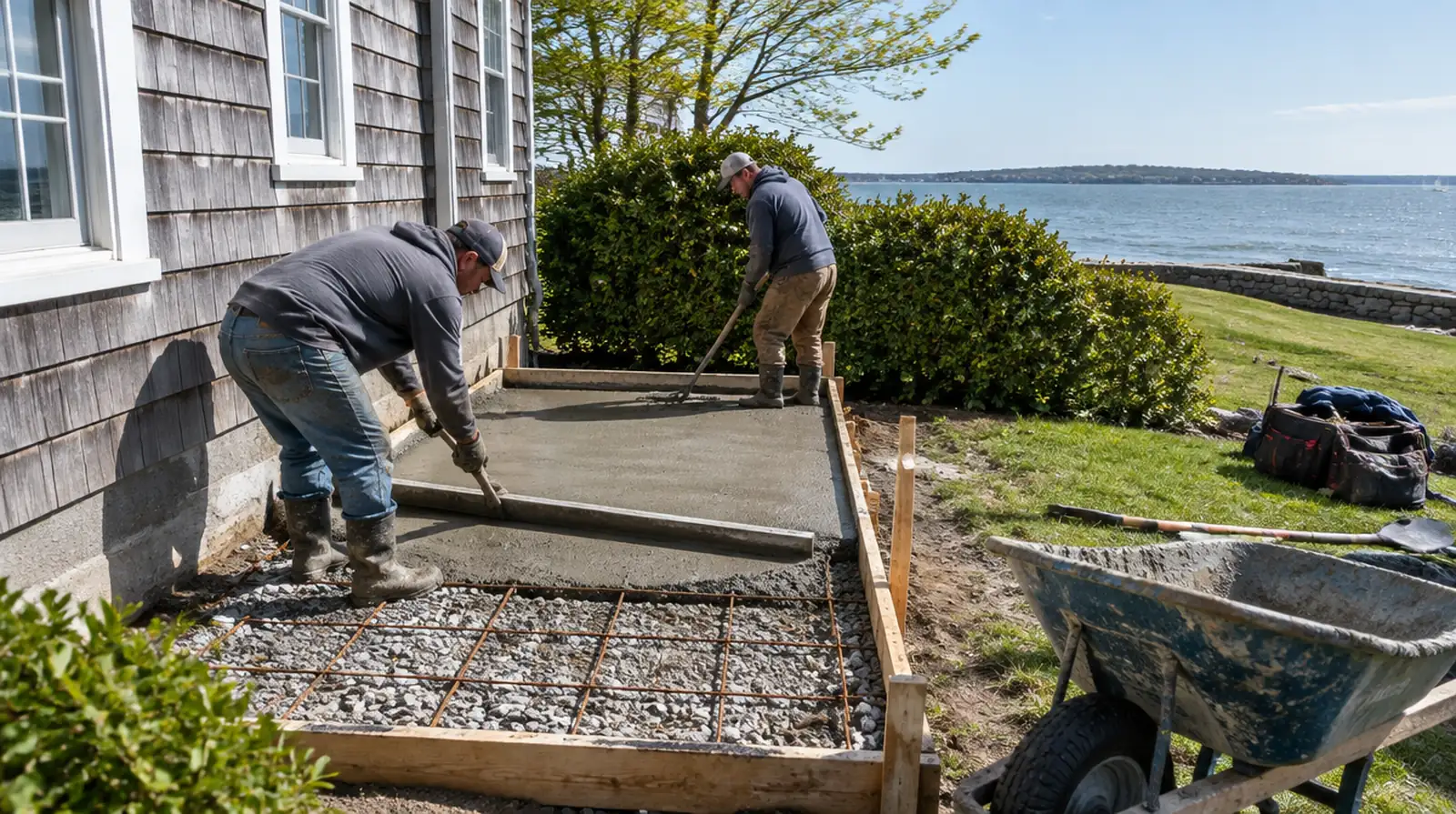
What makes a slab last
- Base. Compacted crushed stone in lifts, never loose fill dumped and smoothed over.
- Thickness. Four inches for foot traffic and light pads, more for vehicles and heavy loads, with thickened edges where they help.
- Reinforcement. Wire or rebar held up in the slab on chairs, so it actually reinforces something.
- Joints. Control joints spaced to the slab size so the inevitable shrinkage cracks follow straight lines.
- Air-entrained mix outside. Westchester freeze-thaw cycles and de-icing salt destroy concrete without it.
- Curing. Keeping the surface from drying out too fast in summer and from freezing in early spring or late fall.
Working on tight lots
Many New Rochelle houses sit close to their neighbors, with narrow side yards and long driveways. When a truck cannot reach the forms, we pump the concrete or move it in by buggy, and we protect lawns and pavers along the route. If the work needs to cross into a neighbor's yard, we talk with you about it before the pour.
Permits and rules
Whether a slab needs a permit depends on what it is for. A garage floor replacement, a pad supporting a new structure or work near the shoreline may need review by the city, while a small replacement pad often does not. We help you find out before work starts so nothing is held up later.
Timeline
A typical residential slab is one or two days of excavation and forming, then a pour day. You can walk on it after a day or two and park on it after about a week, while the concrete keeps gaining strength for roughly a month.
Common questions
Can a cracked slab be patched instead?
Hairline cracks can be sealed. When the slab has dropped or broken into pieces, the base has failed, and only replacement fixes that.
What if you hit rock?
We chip or break it down where needed and level the base over it. We will tell you at the estimate if we expect rock.
Can you pour in winter?
Sometimes, with heated water and blankets, but we prefer spring through fall.
Need a slab poured in New Rochelle?
(914) 350-5719Tell us the size and what will sit on it. We will come out, check the ground and give you a written price.